Excessive static cling occurs when friction between two separate surfaces results in either a positive or a negative electrical charge. Cats with long hair commonly collect quite a bit of the shocking stuff, particularly during the fall and winter. Dry and overheated environments build up static, and combing your cat adds the electrical charge, turning your kitty into a walking static cling factory. However, there are a few simple things that you can do to remove static cling from your cat's fur.
Calm him if he is agitated by petting him for a few minutes or giving him healthy treats. You can also play or exercise with your feline prior to the cleaning. You may want to do this with long cat wand. Some of these include da bird toy, cat teasers, lion cat hat etc. These products will keep your cat relaxed before the grooming session.
Apply hand cream or talcum powder to your hands before touching your cat.
Rub the cat's entire coat with a nylon stocking. This is often all that is needed.
Add moisture to your cat's fur before brushing. A completely dry coat will produce static electricity when brushed or combed. Fill a plastic spray bottle with warm water and spritz the cat's coat lightly with a fine mist. However, many cats consider this to be rude treatment, and won't stand for it. If that is your kitty, just use a clean washcloth dampened with warm water to give the pet an all-over wipe. This works very well for removing static cling.
Spritz the cat's fur with an anti-static pet spray, if the pet will permit you to do so. Otherwise, apply some of the spray to a clean washcloth, and lightly rub the entire coat with it.
Groom the cat only as much as necessary with metal or Teflon-coated combs and brushes. Don't use wire slickers or plastics. Excessive brushing and combing creates static cling in the fur.
Monday, January 11, 2016
Wednesday, January 6, 2016
Taking Care of Your Feline
Caring for a cat comes with a lot of responsibility because you have to provide her with everything she needs to live a healthy and happy life. You'll need to give your new feline friend food, water, a litter box, shelter, environmental enrichment, medical care and plenty of love and affection. Fortunately, the love and companionship you'll get in return make it all worth it.
Give the Cat Litter Boxes
Provide your cat with her own litter box and at least one additional box. In multiple-cat households, have one litter box more than the number of cats. Place the boxes in quiet locations, away from noisy appliances and high-traffic areas. Have at least one litter box on each floor of your home. Use clumping litter and scoop the boxes daily. Doing so keeps the stink down and limits risk of infection.
Provide Fresh Food and Water
Provide each cat with her own food and water dishes, accessible to her at all times. Place them away from her litter box. Feed dry kibble, canned food or a combination of both, one to two times per day. Commercially prepared cat food diets are nutritionally balanced for cats. Follow the feeding recommendations provided on the label of the food you choose so you don't underfeed or overfeed your kitty. The average cat needs about a quarter-cup of dry cat food per day for each 5 pounds of weight, according to the petMD website. Don't forget to change your cat's water a few times daily so that it's fresh and clean.
Visit the Vet Regularly
Bring your cat to the vet at least once per year to make sure she's healthy. Senior cats, 7 years old or older, may need two visits each year. During the visit, your vet will give your cat any necessary vaccinations, check your cat's weight, give her a full physical exam and possibly take blood, urine or fecal samples. In addition to her normal checkups, any time your cat appears ill, lethargic or otherwise unhealthy, get her to the vet right away for an exam.
Groom Your Cat Regularly
Brush your cat's coat daily to prevent her from developing hairballs, improve her skin and coat and keep her coat free of mats. Long-haired breeds may require longer grooming sessions and even the occasional professional trim near the hindquarters. While most cats groom themselves, if you need to bathe your kitty, do so with a cat-safe shampoo and warm water, or schedule a session with a professional groomer. Check her nails weekly and have them trimmed when necessary -- it's a good idea for indoors cats, despite that they sharpen them on everything in sight.
Provide Plenty of Human-Cat Interaction and Exercise
Spend time with your cat daily, letting her snuggle near you in a comfy cat bed. Interact with her using laser cat toys and feather cat wand toys to exercise her. Exercise is necessary to keep your cat physically active and prevent her from becoming obese. Provide her with plenty of da bird cat toys to keep her busy during the day and even when you're at home. The toys will help keep her active and prevent boredom.
Keep Your Cat Indoors
Keep your kitty inside and provide her with scratching posts, cat trees and a window perch or screened enclosure to enrich her environment. Indoor-only cats live longer than those allowed to go outside, according to the Humane Society of the United States. To expose your cat to the outside safely, take her for walks on a leash.
Monday, January 4, 2016
Keeping That Fur White
Keeping a cat clean is not something many cat owners think about, especially since most felines do a respectable job with their own hygiene. Cats spend a substantial amount of time grooming, up to half their waking lives. The white cat, especially the white show cat, has particular needs when it comes to grooming and bathing, as dirt, tears and debris from the litter box can all stain her beautiful fur.
Play or exercise with your feline prior to the bathing. You may want to do this with best cat products. Some of these include laser cat pointer, cat toys, teaser wand, etc. These products will keep your cat relaxed before the grooming session.
Comb your kitty with a fine-tooth comb to remove debris that may be discoloring her fur.
Using a pet wipe, clean her face and around her eyes to remove any stains from tears and cat food.
Sprinkle some cornstarch under you cat's chin, on her bib area and on her paws. Rub gently, then comb or brush away to restore these problem areas to a whiter appearance.
Create a paste by mixing the cornstarch and a small amount of peroxide. Add peroxide slowly until the consistency is like paste. Using a clean cloth, rub the mixture on any urine stains. Remove the paste with a clean, damp cloth. Don't use this mixture around kitty's eyes and nose.
Prepare your bathing area. You'll need shampoo and towels. Choosing a shampoo designed for white cats may give you better results. Open the shampoo before you begin. It's easier to do with dry hands.
Fill your basin, wash tub or sink half-full with warm water. With your right hand under your cat's belly and your left holding her front paws, gently lower her into the water.
Wet your kitty's fur using a cup or your hand. Gently pour water over her body. Once kitty is used to her bath, you may be able to use the sink's spray hose on low pressure.
Remove as much water from your cat's fur as possible by stroking her with your hands. Place her on a towel next to the sink or in the other side of the sink if you have a double sink.
Squeeze a small amount of shampoo into your hand and rub your hands together. If you need to keep one hand on your cat to keep her still, drip the shampoo along her spine to spread it out. Avoid letting large amounts of shampoo deposit onto one area; it will make rinsing far more difficult.
Shampoo kitty thoroughly, keeping the shampoo out of her eyes and the shampoo and water out of her ears.
Return kitty to the sink or basin you filled with warm water. Rinse her well, using clean water once the bath water becomes murky from shampoo. Keep a pitcher of clean, warm water standing by if your cat doesn't like the sound of running water. For long-haired cats, such as Persians, float them in the water, allowing the fur to spread out along the water's surface. Add water to the basin to raise the water level, and be sure to hold onto kitty so her face isn't submerged. Floating makes for easier shampoo removal.
Drain the tub and remove as much water as you can from your cat's fur by stroking her with your hands.Dry your cat by rubbing her gently with the towel.
Blow-dry your cat's fur on the lowest setting. Use a cooler setting than you'd use on yourself to make certain you don't burn her skin.
Friday, January 1, 2016
Unmat Cat Hair
Long-haired cats are particularly prone to matting. A mat is a clump of knotted fur that can cause a cat discomfort if allowed to mat down to the skin. Mats are usually caused by an owner's failure to groom regularly enough, so if your cat has hair prone to matting, comb it out at least once a week. If mats are allowed to get bad enough, the cat will likely need to be shaved, after which you can begin a regular grooming regimen.
Before or during the grooming session, your cat may fight, bite and scratch. It's best to take precautions to protect both yourself and the cat. However, you may attempt or try to play with gocat da bird toys with some rewards such as purina pro plan cat treats. These wand cat toys will help calm down the cat and less aggressive.
Separate the mat. Identify a mat to work on and separate it from the surrounding hair.
Hold the mat at the base of the hair shaft. Grip the base of the mat with your fingers before you start combing to avoid pulling on your cat's skin.
Use the end tine of the comb to pull apart the mat. Gently pull and separate the mat, starting furthest from the skin and working down. If the mat is too big or too stubborn to separate this way, use a pair of blunt-tipped scissors and cut once into the mat, perpendicular to the skin. Treat the two cut sections of mat as two separate mats and continue trying to pull them apart with your comb. Always untangle a mat all the way down to the skin. If a little tangle is left over, it will quickly grow to a big one again, and it will pull on your cat's skin in the meantime.
Inspect and de-mat under the joints and behind the ears. These areas have the most friction during normal activity and are the most likely to mat.
Brush through the cat's coat with a soft metal-toothed brush. Once all the major mats have been pulled apart, brush through the cat's entire coat. These brushes will pull out any last bits of matted fur and should run though the coat smoothly if the cat is fully de-matted.
Cut off the most stubborn mats. If there are mats that are just too tangled to comb out, you can carefully cut them off using your blunt-tipped scissors. Be careful not to cut the skin, as the skin of cats is very thin and could bleed profusely if nicked. Don't worry about the appearance of a cut mat, since the hair will grow back quickly.
Wednesday, December 30, 2015
Comforting a Cat in Heat
Although most non-breeding female cats (queens) are spayed before their first heat (estrus), an adopted stray or a cat you’re cat sitting might surprise you by going into heat. A cat in heat yowls, rolls on the floor and continually tries to get outside. It’s annoying to people and not particularly comfortable for the cat. While estrus lasts only 4 to 10 days, taking steps to comfort the queen in heat will make the time less stressful for you and your cat.
Show your cat extra physical affection. Most cats in heat strongly desire affection. Put your cat on your lap and pet her. Groom her several times a day with a soft-bristled brush, rubber curry brush or grooming glove. These brushes are safe to use frequently without harming the cat’s fur or skin.
Distract your cat with play or cat exercise. During estrus, many cats have extra energy, most of which they use to try to get outside. Regular play sessions will use up some of her energy and keep her mind off her desires. Interactive play, such with a cat fishing pole, is ideal. If you have limited time to play, provide bird catcher cat toys.
Consult a veterinarian about prescription feline contraception. Cat birth control comes in pill and injection form. Both stop your cat from having a heat cycle. Because long-term use has side effects such as increased risk of uterine infections and diabetes, your vet should help you decide whether this option is appropriate.
Place the cat in a cool, dimly lit room for several days to simulate autumnal conditions. Queens go out of cycle when the days are cooler and shorter. Spending time in similar conditions may bring your cat out of heat. Continue providing affection and frequent play sessions to prevent boredom.
Enlist the services of a teaser tom cat. A teaser tom is a male cat that has been sterilized by vasectomy. Such a cat retains the physical ability to mate. Mating your female cat with a teaser tom will bring her out of heat with no risk of pregnancy. Contact a breeder to find a teaser tom for rent.
Wednesday, December 23, 2015
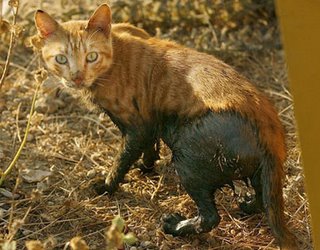
Getting Motor Oil off Your Feline
Surprisingly, motor oil in kitty fur is a relatively common problem that pet owners must deal with. After all, motor oil can be transferred to your cat's fur from the ground, from walking under a car or even from rubbing against an oily surface. Cleaning the oil off can be a little tricky, especially since most cats prefer to clean themselves and dread water. However, it's important that you clean the oil off your cat before she licks it off on her own.
Fill a sink with warm water. You can substitute a bathtub or a bucket, but a sink is probably the best place for you to work, since you'll be able to stand and maneuver easily.
Set up the soap, towel and treats around the sink. It's important to have everything ready before you begin to minimize the time you have to confine your feline (who will likely become nervous or frightened).
Place the cat in the sink slowly. She will likely fight you, so provide a treat or food to distract her. You may also want to play with her first to calm her down. You may want to do this with the use of durable cat toys, such as a feline flyer, or other inanimate object rather than his fellow feline housemate. A good product is the bird catcher pro. It is a cat toy wand that your cat will surely enjoy especially after behaving properly. You also may benefit by having another person to help you. Speak softly to the cat to calm her down.
Scoop water up with your hands and release it onto the cat. Make sure your cat's entire body is wet.
Squirt a few drops of dish soap in your palm and work up a lather. Gently massage the soap into your cat's fur. If necessary, use more soap.
Rinse your cat with water and dry her off with a towel. If you still notice motor oil on her fur, repeat the process once again.
Clip the hair on your cat if the oil still remains after washing. You can also take her to the groomer and request a full-body shave.
Tuesday, December 22, 2015
Dog training for a Cat?!
Think you can't train a cat like a dog? Think again! Unlike dogs, cats will not do anything they don't want to do. With a little patience, food, some best cat toys and a little plastic and metal clicker, soon you will have your cat sitting, staying and coming when called.
Study your cat's behavior to see what it does naturally, then reinforce that behavior with praise. Whenever action you'd like your cat to repeat, such as fetching, or coming to its name, praise it by saying, "Good!" and pet it at the same time. It will quickly learn to associate the praise by performing this act.
Use food and a plastic and metal clicker as training tools. To get the cat to associate food with the clicker, give her a treat, then use the clicker. Do this every time you feed her a treat or her regular meal or play with her favorite da bird cat catcher. To make sure she's made the connection between the clicker and food, use the clicker to see if she runs to where you would normally feed her.
Be consistent with the commands you use. Do not use "come" and then "here." It will only confuse the cat.
Use the cat's name with each command, and praise her with petting and saying, "Good Tigger" (or whatever your cat's name is). Positive reinforcement goes a long way.
To get a cat to sit on command, hold the food reward over her head. Speak her name, say, "sit," then move the food back over the cat's head. This will make her sit down, as her head naturally follows the food. The second she sits, use the clicker, say "sit" again, then give her the food reward. It won't take long for her to associate the food reward with the command, and the clicker will become a thing of the past.
After teaching your cat to sit, it will be easier to teach her to come. Once she's gotten to the point of coming to the food station at the sound of the clicker, say, "come" and then use the clicker. When she arrives, give her some food, play around with go cat toys and praise her, as with every training command. Try this at different locations around your house. Eventually she will come to you without having to use the clicker.
Getting your cat to stay is one of the harder training sessions you might have. Take the food, put it about ten feet away from the cat. As she walks toward the food, put out your hand and say, "stay." If she stops moving, use the clicker, and give her the food reward. If she keeps moving, keep repeating the command, "stay" until she stops. Only reward her if she stops. Repeat this until she understands that "stay" means "stop where you are."
Subscribe to:
Posts (Atom)